27 March 2026, By Leo Broderick.
The spring legislative session is our chance to fix a regulatory framework that rewards the wrong things.
Prince Edward Island has committed to reaching net zero emissions by 2040 — among the most ambitious climate targets in the country. Yet our primary electricity law, the Electric Power Act, last consolidated in 2017, contains a structural flaw that works against that goal. As MLAs assemble for the spring legislative session, they have an opportunity to begin fixing it.
The problem is what energy economists call “capex bias” where utilities are financially incentivized to choose capital-intensive projects over more efficient operating solutions. Under sections 21 and 24 of the act, Maritime Electric earns its profit by building physical infrastructure — poles, substations, generators — which gets added to its rate base. The more capital assets the utility accumulates, the higher its earnings.
Operating expenditures, by contrast, are simply passed through at cost with no profit margin. This creates a self-reinforcing incentive: the utility is financially rewarded for choosing the most expensive capital-intensive solution, even when a cheaper and better alternative exists.
Comparable jurisdictions
This is not a theoretical concern. Maritime Electric has proposed installing two refurbished fossil-fuel reciprocating engines on the Charlottetown waterfront (Docket UE20742). This infrastructure will lock ratepayers into decades of carbon-intensive generation at a huge cost to ratepayers. Under the current act, there is no statutory obligation to rigorously evaluate whether battery storage, demand response, or enhanced renewable integration could meet the same reliability needs at lower cost. Section 17, which governs the capital budget process, contains no screening requirement for these non-wires alternatives.
This gap puts P.E.I. behind comparable jurisdictions. New York’s Reforming the Energy Vision (REV) framework requires utilities to test distributed alternatives before approving major capital projects. This approach saved ratepayers hundreds of millions when Con Edison Energy replaced a proposed $1-billion substation with 52 megawatts of distributed energy resources. Ontario has established distributor-specific reliability targets with meaningful financial consequences. Hawaii, an island jurisdiction with challenges remarkably similar to P.E.I.’s, has implemented performance-based regulation that ties utility earnings to outcomes rather than asset accumulation.
Suggested amendments
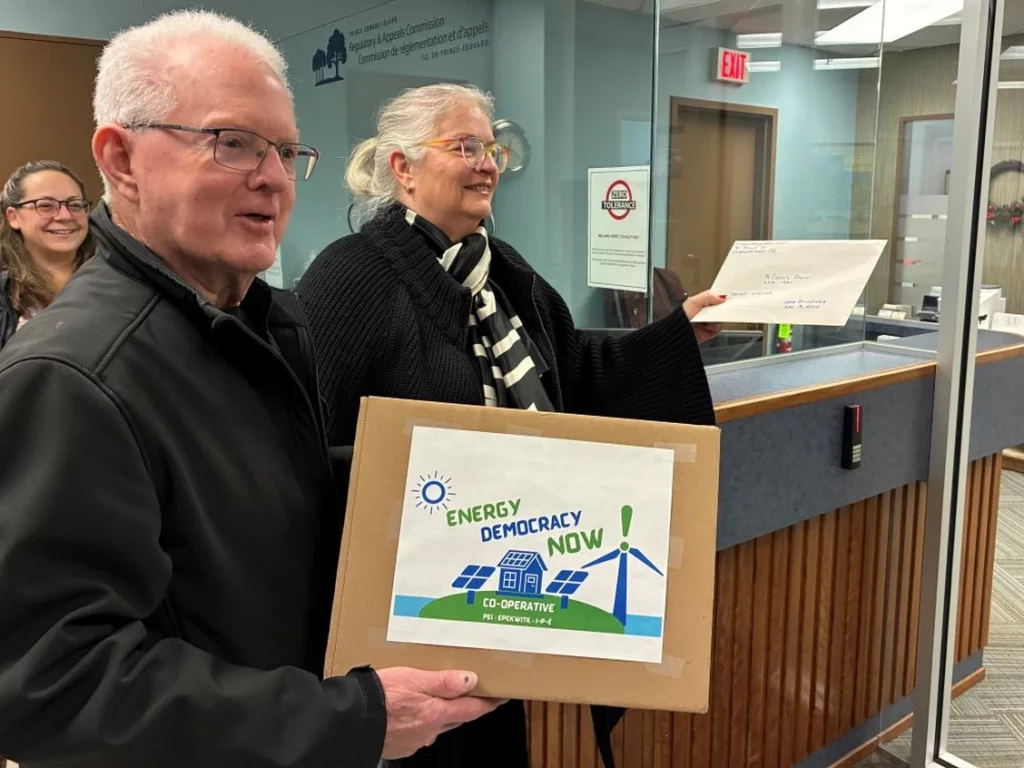
Our organization, Energy Democracy Now! Co-operative will soon be publishing a comprehensive jurisdictional scan examining eight leading regulatory frameworks worldwide. Based on that analysis, we urge the legislature to prioritize five achievable amendments during this session:
- First, amend the act’s preamble to explicitly reference climate objectives and incentive alignment in public utilities with the achievement of reliable, affordable, and sustainable electricity service, signalling clear legislative intent to IRAC.
- Second, update Section 1 definitions to recognize distributed energy resources, energy storage, and non-wires alternatives — technologies which the current act does not acknowledge.
- Third, add a new Section 17.2 mandating that any capital project above a defined threshold must undergo a rigorous non-wires alternatives screening before approval.
- Fourth, require Maritime Electric to produce an integrated resource plan that evaluates feasible supply and demand-side options over a 20-year horizon.
- Fifth, strengthen reliability reporting by requiring monthly SAIDI (durations of electricity interruptions) and SAIFI (frequency of electricity interruptions) disclosures, replacing the current regime where the maximum penalty for avoidable outages is just $5,000.
None of these changes requires a fundamental restructuring of rate-making. They are process and transparency reforms that lay the groundwork for deeper modernization, performance-based regulation, revenue decoupling and a total expenditure approach in subsequent sessions.
The path to net zero in 2040 is not primarily a technology problem. P.E.I. has abundant wind and solar resources, falling battery storage costs and a population genuinely committed to climate action. The barrier is a regulatory framework that makes Maritime Electric’s profit motive work against our collective goals.
This spring session of the legislative assembly is the moment to begin aligning the two.